
Friday, May 16, 2014

Teaching Children Safety

Teaching Safety to Children

good-bad-choices


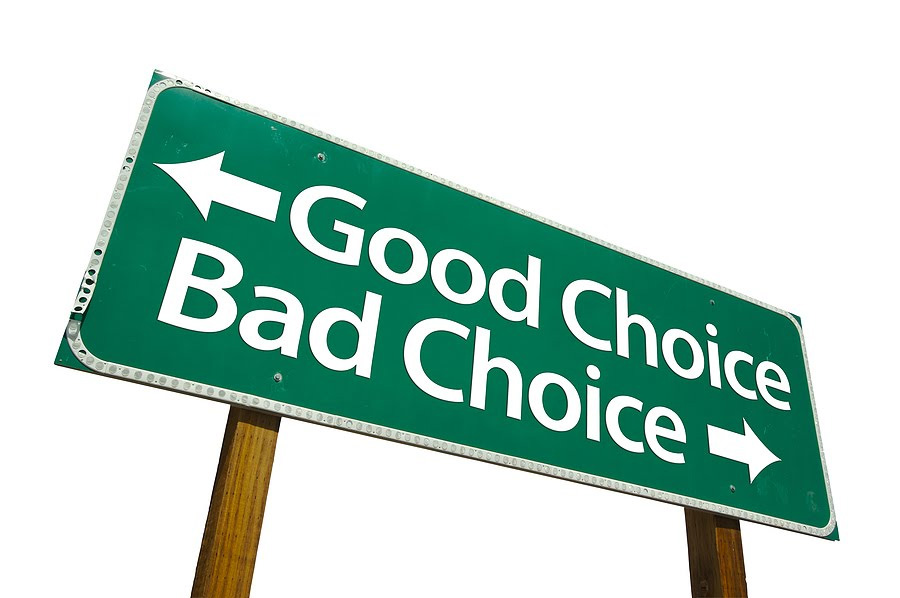
The 5 Questions of How to Make a Good Decision
Making a good decision is Self-Defense.  Did you know that accidents are the number one cause of death among children?  Did you know that children who take swimming lessons are actually more prone to drowning due to overconfidence in their ability?  Children are impulsive so what if as parents & educators we taught them to “Think before they act”?  Teaching children HOW to slow down, think before they act & listen to their conscience makes sense to stay safe.  This is another component of Intelligent Curriculum in our Martial Arts Education taught by Sensei Dan Rominski at TheDOJO.  Also, these 5 questions work well for teenagers & adults.

1.  What Would My Parent’s Say?
Think before you act!  Making a good decision is about thinking before you act.  This usually results in a safer outcome.  Not thinking before you act is called being “Impulsive”.  Being impulsive can lead to something bad, dangerous or foolish to happen.  One is to be mindful the other is to be mindless.  Before doing something ask yourself, “What would my parent’s say if I…?”  Consider what your parent’s would say & then make a “good” decision.

2.  What Would My Teacher Say?
“It takes a village to raise a child”,  Parents & teachers are like the tribal elders of a village who have lot’s of life experience.  This means that when we listen to them & their wise advice we don’t have to re-invent the wheel. We can however learn from their past mistakes & successes.  Before doing something ask yourself, “What would my teacher say if I…?”  Consider what your teacher would say & then make a “good” decision.

3.  Could I Hurt Someone?
It’s easy to think only about ourselves, but that is a little selfish.  When we think of others we expand our awareness beyond ourselves & consider how our decisions may affect other people.  What we choose to do has a good or bad consequence.  Before doing something ask yourself, “Could I hurt someone if I…?”  Consider how your choices & actions could result in something good or something bad for others & then make a “good” decision.

4.  Could I Hurt Myself?
Look before you leap!  This idea can prevent something bad or dangerous from happening.  Think before you act & ask yourself, “Could I hurt myself if I…?”  Consider the answer & then make a “good” decision.

5.  Should I Do It?
The question of questions!  Ultimately ask yourself, “Should I do it?”Consider if your actions will be morally correct & how they affect the rights of other people.
After considering your answers of these five questions to Think Before You Act & Make a Good Decision go ahead & decide.  Think wisely…use your common sense & good sound judgement.  Trust yourself that if you thought deeply about it chances are you’ll come up
with the right answer.

Parents could give examples of something bad or something good, these questions actually apply either way.  Teach the child to go through all five questions for each scenario.  Be patient & let them come up with the answer, allow them to learn to listen to their own gut feeling or conscience.
Some ideas might be…

Bad Things
“What would your parents say if you climbed up that couch?”
“What would your teacher say if you cut in line while waiting your turn?”
“Could you hurt someone if you played rough?”

Good Things
“What would your parents say if you cleaned your room?”
“What would your Teacher or coach say if you ate all these vegetables?”
“Could you hurt someone if you share?”


Tuesday, February 18, 2014

EZ Defense for Children-Setting Verbal Boundaries, Non-Violent Conflict Resolution and HOW NOT to be an Easy Target for Bullies and Predators.

EZ Defense for Children-Setting Verbal Boundaries, Non-Violent Conflict Resolution and HOW NOT to be an Easy Target for Bullies and Predators. 
EZ Defense & The 3 Colors of Awareness
Setting Verbal Boundaries & Nonviolent Conflict Resolution 
The Three Colors of Awareness are Yellow Alert, Orange Alert & Red Alert.  Each color represents a different action one takes for personal protection.  In Self-Defense Awareness is key to staying safe.  Whether one is warding off a bully, a stranger or a grown up which makes us feel uncomfortable knowing what to do & how to do it will protect us & could even save our life.  
Yellow Alert
The first Color of Awareness is Yellow Alert.  Yellow Alert is when there is no danger but there could be, in other words paying attention to our surroundings & environment.  Children could be in Yellow Alert while riding their bike such as paying attention to cars or driveways to prevent or avoid accidents.  Grown ups could be in Yellow Alert while driving like paying attention to the road or cars around them to prevent or avoid danger.  We should always be in yellow alert, always looking to prevent accidents or dangerous acts from happening to us through paying attention to our environment & surroundings & what is going on around us at all times.
Orange Alert
Orange Alert is when one gets that weird gut feeling in their stomach like something is wrong and they LISTEN to it.   We also know this as having “butterflies” in our stomachs.  This feeling could happen when we are scared or nervous such as the first day of school or getting on stage in front of an audience.  It could also happen when we are being picked on by a bully or a grown up makes us feel uncomfortable.  In orange alert we take some sort of action when we feel something is wrong.  We might assume a self-defense stance, we might assertively set a verbal boundary or we might leave a dangerous situation & tell a grown up.  Usually something bad occurs when we get that gut feeling like something is wrong & we ignore it.  A great example of orange alert is setting a verbal boundary for either a bully, a stranger or to anyone when they make us feel uncomfortable.  Here is more information on to how set a verbal boundary correctly.
The Verbal Boundary a Tool for Non Violent Conflict Resolution
When it comes to communication it is important to say the right thing in the right way. Be aware of using the right body language, the right tone of voice & the right words for the a situation.  If we are too passive we might unintentionally make ourselves out to be an “easy target”.  If we are too aggressive we may escalate a situation to become worse than it started.  Assertive communication is not too passive nor too aggressive but is just right to show that we don’t want any trouble but are willing to protect ourselves if we have to.  There is a physiology to every emotion we feel & body language is the biggest form of communication.  The next biggest form of communication is our tone of voice & last are the words we use.  In self-defense we want to become aware of our verbal & non-verbal communication.  
Passive Communication
Examples of Passive Communication might be avoiding eye contact, looking down, hands in the pockets or the body sunken in as if we are “shrinking away from the trouble”.  The tone of voice would be speaking quietly or sounding “mousey” projecting a lack of confidence or willingness to protect oneself.  The words used in Passive Communication may be in the form of asking instead of telling such as “please don’t hurt me” or “please leave me alone”.  Passive Communication could make us seem more like an “easy target” & unintentionally invite more trouble towards us.
Aggressive Communication 
Aggressive Communication is not good either.  While it may display more confidence than being passive if we are too over the top we might invite trouble by escalating a confrontation rather than deescalating it.  Also if we lose control emotionally we will not be able to “think straight” & make good decisions.  Examples of aggressive communication might be shaking our fist at someone, pointing a finger at someone’s face or standing with fists up looking like we are ready to fight.  Shouting & yelling uncontrollably while saying mean or derogatory things is not an effective way to communicate as well.  We might “set someone off” to lash back at us out of anger or embarrassment.  This may start a fight rather than preventing one.   
Assertive Communication
Assertive Communication is as if to say through our body language our tone of voice & our words “Look I don’t want any trouble but I will protect myself if I have to.”  It may be as simple as “standing up” or “speaking up” for yourself or it may be setting a verbal boundary.  How do we set a Verbal Boundary with Assertive Communication?  We need to include the right body language tone of voice & words.  The Body Language is a self-defense stance with one foot back, both hands up & the palms open as if saying “stop” while making good eye contact.  The tone of voice is loud & sharp projecting confidence.  It might be like a “Bad Dog” tone of voice like when yelling at a dog after it goes to the bathroom on the rug.  The words we use change for different situations.  
Orange Alert for a Bully
When confronted by a bully we might shout “Back Away!” or “Stop!” or “Leave Now”.  Tell them exactly what you want them to do but don’t say anything that might embarrass or anger them.  Always allow them an honorable exit especially in front of peers.  It’s also smart not to “get into it” by getting drawn into an argument going back & forth with an aggressive discussion.  Be loud to set the verbal boundary & show you are not an easy target & also to attract the attention & help from a teacher or parents nearby.
Orange Alert for a Stranger
When a stranger either aggressively or quietly approaches a child or signals them or asks a child to go with them somewhere we assume the same self-defense stance & loudly shout “This is NOT my mom this is NOT my Dad, Stranger Help!”  Be loud to attract attention & then look around & go for help.  Tell a grown up immediately.  Go back inside a school, into a house, find a parent, friends parent, teacher, police officer, fireman, paramedic, security guard, life guard & life guard station or someone who wheres a uniform at a store, a mall or an amusement park or find a mom with kids.  The main thing is to be loud & to attract attention, get help & stay in a place with lot’s of people.  Never allow yourself to go with anyone.  Sometimes getting away is not an option.  If this is the case wrap your arms & clasp your hands together around a bicycle, street sign, park bench or some object to make it difficult for someone to pick you up.  All the while shout the right words & attract help by being loud.  A stranger may give up & leave if you are a difficult target.   Also if a grown up, teenager or peer who is not a stranger but someone we & our family knows & trusts is making us feel uncomfortable through touching us also set a verbal boundary. Be loud & clear yelling “STOP!” or “NO!” then leave & tell a grown up right away.  You might tell your parents or a teacher at school.  If the grown up who you tell doesn’t do anything about it, tell someone else & keep telling someone until you get the help you need.


A quick video demonstrating how to teach children to latch on to objects -Deterring child abductors by being a difficult target.  By Sensei Dan Rominski teaching a children's class from age 3 to age 12 at his martial art school TheDOJO in Rutherford, NJ


Turn Fear Into Power
When we become scared or nervous we experience the effects of adrenaline.  Adrenaline is something natural our body produces when under stress which can make us stronger or run faster to get away from danger.  It can also cause us to “Tense Up” or “Freeze Up” at a time we don’t want to.  It can produce effects like “Tunnel Vision” which is when we become fixated visionally on something while under stress staring at a fist, a finger pointing at us or a weapon.  “Auditory Exclusion” is when we “Block Out” all sounds like instructions.  We keep control by remembering to breathe.  Breathe in & out.  This helps us to remain calm & make good decisions.  When we shout we naturally breathe out & it forces us to breathe back in & is another great way to break “The Freeze Response”.
Whenever we set a verbal boundary be sure to breathe & keep a safety distance.  Don’t let anyone inside your “Bubble”.  “The Bubble” is the safety distance to keep away from a Bully or Stranger.  If we are too close they could reach us to do harm.  For bullies keep back at least three arm lengths away & for strangers at least ten.  Extend your arm out in front of you & imagine counting these arm lengths from an object in the room or practice stepping back from an object in the room so you know how far away to stay back.  Never let anyone inside your bubble you don’t want to be there.
Red Alert
Red Alert are the physical self-defense techniques of the martial arts & are used only as a last resort.  If we do Yellow Alert & Orange Alert correctly we may never have to get to Red Alert.  Preventing something dangerous from happening is always better than dealing with it after something bad occurs.  That being said never let anyone harm your body.  Always use as much force as necessary to protect yourself or to get away but don’t go beyond that, this is called Justifiable Force.  For instance if a bully calls you a name & you push him that is not justified because you are using more force than is needed to protect yourself.  Perhaps it would be better to leave & tell a teacher.  However if a stranger tries to take you away you can use the techniques of the martial arts to defend yourself against the stranger.  When it comes to strangers & grown ups hurting children or anytime you fear for your life in this case there are no rules in self defense.  You do what is necessary to protect yourself.

A quick self-defense video of Sensei Dan Rominski teaching children how to physically defend/protect themselves. 

 “Children Protect Themselves with their Knowledge.”  This is why as a part of our Martial Arts Education at TheDOJO Sensei Dan Rominski teaches through our Intelligent Curriculum The Three Colors of Awareness.  For more information regarding this & other self-defense concepts please contact Sensei Dan Rominski.
Visit our website http://www.thedojo.org   We teach Self-Defense to children. The DOJO curriculum is based on children's ability to defend themselves. Dog Attack Protection 101 falls under that category of building a defense against the dangers of unexpected attacks.


Sensei Dan Rominski Chief Instructor at his martial art school TheDOJO in Rutherford NJ teaches Dog Attack Prevention 101 to Children.  


Sensei Dan is available for Scheduled TALKS & PRESENTATIONS. 

Get more information about our Martial Arts Education of Intelligent Curriculum involving Everything Self-Defense at TheDOJO located in Rutherford NJ. 
Contact Chief Instructor: Owner Sensei Dan Rominski at (201) 933-3050 or email SenseiDan@TheDOJO.org
Visit our website http://www.TheDOJO.org

TheDOJO -  52 Park Avenue, Rutherford, NJ 07070 - Phone: (201) 933-3050 - Text us for info here: (201) 838-4177

Our e-mail address: SenseiDan@TheDOJO.org- Our Facebook page: Like us at TheDOJO or Friend us DanRominski


A link to where our school is on Google Maps: http://www.google.com/maps/place/TheDOJO/@40.828037,-74.103237,1...
If you live in the Rutherford, NJ area and would like to inquire about our programs, reach out to us at the phone and/or e-mail or text addresses above. -Sensei Dan


Credits
Written by Dan Rominski
Content complied from
Dan Rominski
Tom Callos
Tom Patire
Bill Kipp

Monday, July 8, 2013

Think Fast Under Pressure

The other day while with some friends, one being 95 years old, we were standing outside of a farmers market in 90 degree whether when suddenly our elder friend fully collapsed & passed out. Reflexively my wife (a second degree black belt) & I caught her & lowered her to the ground protecting her from hitting her head & other joints. Someone that age can easily break a hip & may never recover. All in a matter of a few moments a flash of thoughts popped into my mind...protect her from the fall, don’t let her bang her head or joints, be careful not to squeeze too tightly as I may crack her rib bone, check vitals, call 911. All of these thoughts flash into my mind while staying calm & alert. We also had our 19 month old twins at our side as well. For a martial artist this comes easier than most people. Free style sparring & grappling is great for this kind of thinking fast under pressure deveoplment. When one spars they are multitasking mentally & learning how to control their emotions. Think about it when a 7 year old is sparring a 13 year old someone almost twice their age & size they are focused on prevailing in the match not on letting their emotions run wild. They practice, dodging, blocking, countering, strategies all the while keeping a calm & steady mind when they may actual feel like running (althought in self-defense is that the first option). The children welcome the task that makes them go beyond themselves. This character strength is intrinsic. In Japanese martial arts it is called Heijo-Shin. When a parent enrolls their child it is difficult to explain these type of intrinsic, subjective character strengths but they are there. They will also be there when a child needs to think fast under pressure when faced with a bully, when faced with a child abductor, when faced with a difficult test at school, when faced with speaking up against unhealthy peer pressure. Martial arts training in our program develops the body mind heart & spirit for both children & adults. When you need it will be there, we develop it by coming TheDOJO.

Wednesday, March 2, 2011

Operation Jersey Cares Food Drive at TheDOJO


Project Based Leadership Training also known as PBLT teaches a student HOW to develop leadership qualities such as communication skills while managing people & resources. This builds confidence to engage in interesting projects & ideas that make a difference. This food drive project from student Maria at TheDOJO is a WOW! Maria mobilized resources inspiring donations local media. The artwork commissioned by Maria was created by fellow student Natasha, age 16. This is a fine example of how to manifest the qualities of the martial arts such as focus & confidence out of TheDOJO & into the WORLD! This takes the martial arts beyond the realm of a kick, punch or throw. http://www.thedojo.org/operation-jersey-cares/
Learn more click the link above Sensei Dan

OPERATION JERSEY CARES FOOD DRIVE
SPONSORED BY THEDOJO

TheDOJO, located at 52 Park Avenue in Rutherford, New Jersey is collecting non-perishable food items for Operation Jersey Cares, a non-profit organization which relies on community support and donations as they provide food and other items to our men and women serving in our military. TheDOJO sponsored food drive will accept items until Monday, March 28, 2011. Aiming for excellence, the school is looking to collect 2000 plus non-perishable food items by the end date. TheDOJO is asking for community support as they aim to reach their goal.

Project Leader and Martial Arts student, Maria Scala said “Supporting the military has always been extremely important to me and my family. The troops rely so much on support from home for morale purposes.” When asked why she chose to focus on the military for her second DOJO leadership based project, she responds by saying when her sister began dating a Marine two years ago the support for military men and women took on a whole new meaning. In a few months Maria will stand up as maid of honor for her sister at her May wedding. Her new brother-in-law will be the very same Marine. “When I was promoted to my current rank and tasked to lead my second project, I turned to the veterans because of the Marine in our family. I began to research organizations like Operation Jersey Cares. Their mission is simple, to provide our men and women a little piece of ‘home’ during their tours. Being part of something like the DOJO, knowing we’re making a difference in the world through projects like the food drive, among other successful community based projects, is like your birthday and earning your black belt all at one time; it’s an incredible feeling.”
For further information, please contact TheDOJO at (201) 933-3050.
Below is a list of items requested most by our troops:

Beef Jerky/Turkey Jerky Breath Mints
Candy (not chocolate) Cereal (single serving size)
Cereal Bars Coffee
Coffee Creamer Cookies (sandwich type)
Dried Fruits Granola Bars
Gum Hot Chocolate
Kraft Easy Mac Microwave Foods (non-perishable)
Nuts Powdered Drink Mix
Pringles (cans only) Pumpkin/Sunflower Seeds
Slim Jims Soup (cup of soup/soup at hand)
Sugar Tea Bags
Trail Mix Tuna (can or foil)
Twizzlers


Tuesday, February 15, 2011

A discussion about Love...

Yesterday was Valentine’s Day 2011.  At TheDOJO our words of the week were Confucius said, “Love”.  Some of our discussions with the children, parents & adult students included HOW to love & HOW to become a whole human being capable of expressing love towards others sustainably.  3 ideas about love were taught.

Idea number one.  Becoming a whole human being.  It has been said that in a loving relationship two people are a half circle coming together to make a complete circle.  Let’s evolve this idea to a higher level.  What if each person was a whole circle, a whole human being.  Rather than being dependent on the other for completion, as a whole independent circle the two can come together & overlap forming a third circle as if 1+1=3.  They interdependently create something that was not there before.  A loving relationship based on trust & trust worthiness, temperance, conviction a virtue of unconditional love.  This is not to be confused with infatuation, a vice & common feeling mistakenly thought to be love but is not.  

Idea number two.  What constitutes a whole human being?  We taught the children that self-love is just as important as outwardly expressing love to someone else.  A healthy environment inside ones own mind & heart can create or attract a healthy loving relationship with another on the outside such as with a spouse, family member or friend.  Self-respect, self-worth, self-discipline, self-esteem, self-control, self-confidence all cultivate self-love.  A person who loves themselves too much or too little will not be able to serve another in a loving way sustainably, therefore a balance in self-love should be reached.

Idea number three. Love is a verb.  It’s Hollywood & commercial holidays such as Valentine’s Day that teaches that Love is a Noun.  We get Love the noun by performing Love the verb.  In other words to love someone is through action, to treat them with respect, honor them, be trustworthy & affirm their worth & potential.  

Children as young as 4 years old picked up very quickly this introduction to Love.  Although incomplete this discussion inspired intelligent thought & to use one’s mind in a form of self awareness.  Practice & pondering deeply one can explore love in a healthy & sustainable way.